7 things · 4 min read
7 Things Most Snorers Don’t Realize (Until Someone Tells Them)
You sleep right through it. The person next to you hears every minute. Here’s what snoring can quietly cost you at home and on the road, and a small under-chin device designed to help reduce it.


Quick check
Sound familiar?
Count how many of these have happened at your house.
- Nudged, elbowed or told to roll over in the middle of the night.
- Recorded snoring on someone’s phone, then played back at breakfast.
- Earplugs or a fan on high, just so someone else can sleep.
- The couch or the guest room, because someone gave up on the bed.
- Teased about it on a trip, in a hotel or at a family visit.
Two or more? Your snoring isn’t just your problem anymore. Keep reading.

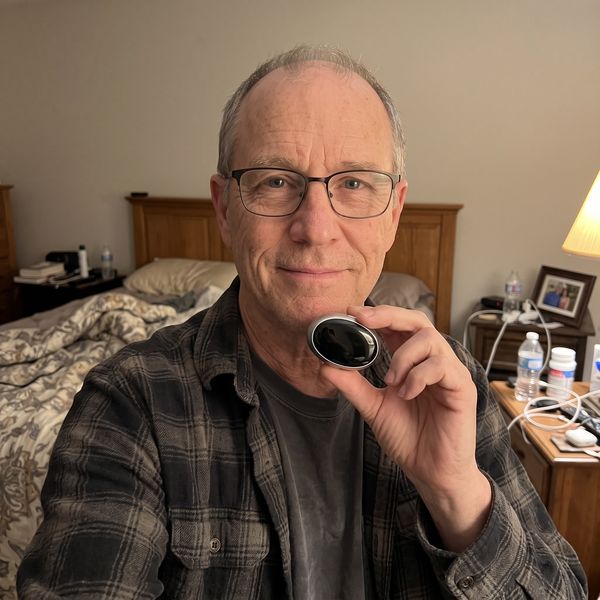
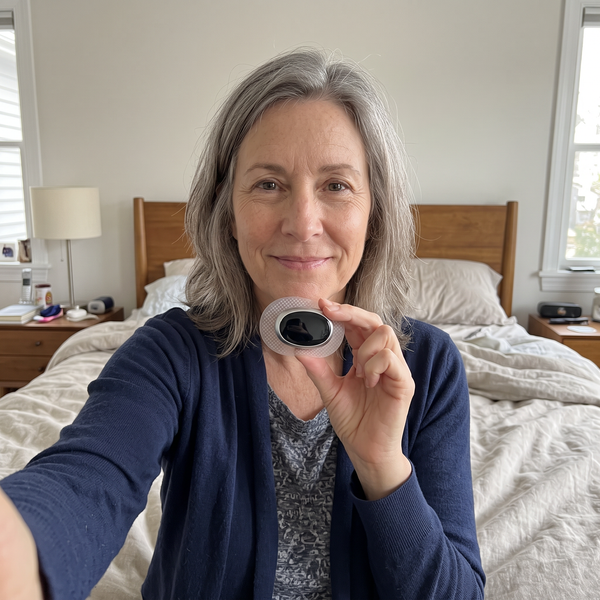
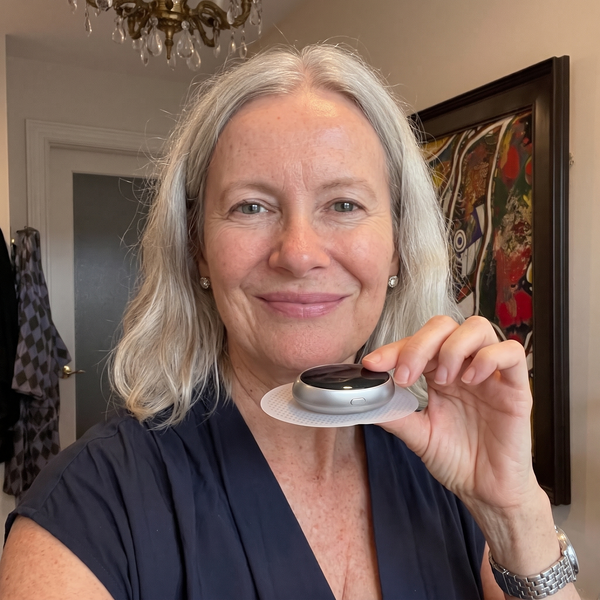
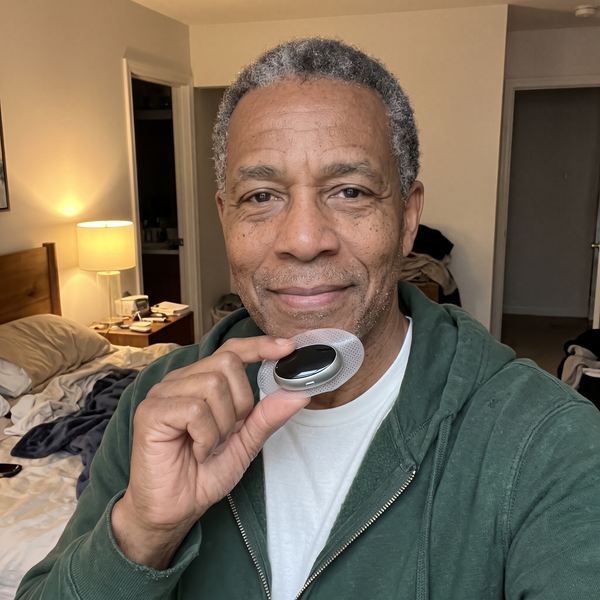
Meet SleepLabs Pro
What the little device actually does
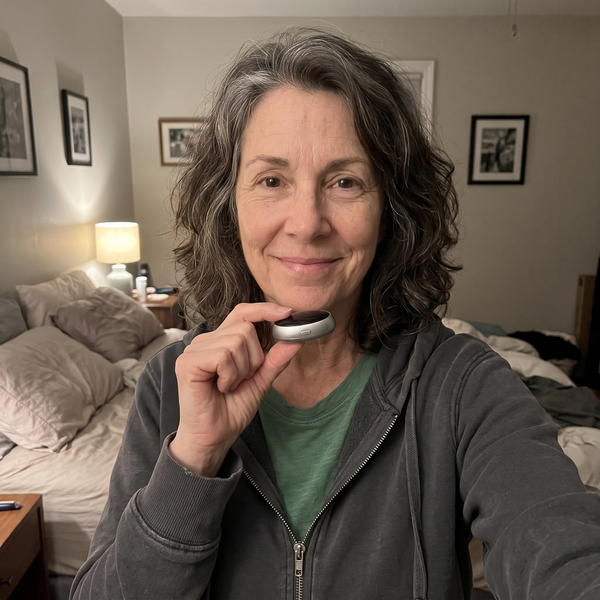
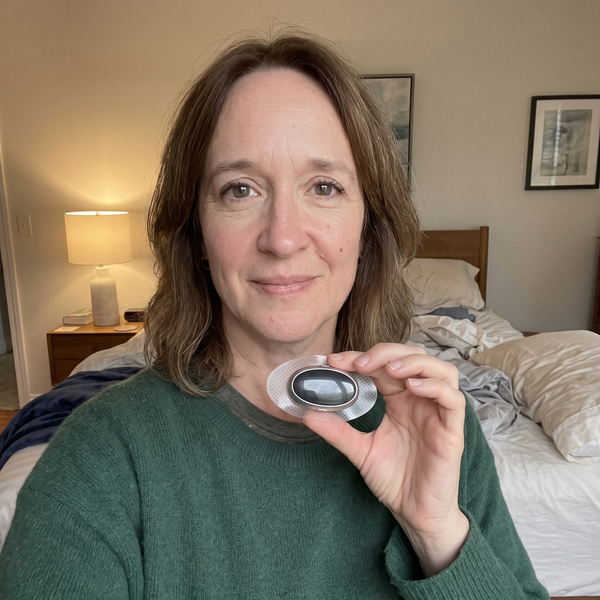
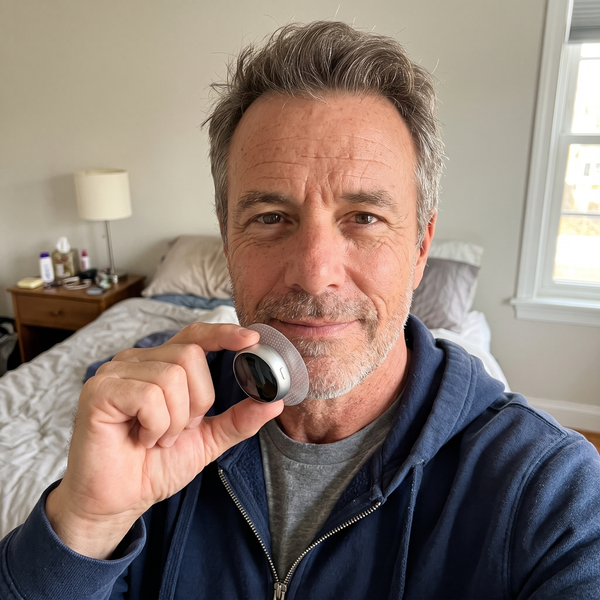
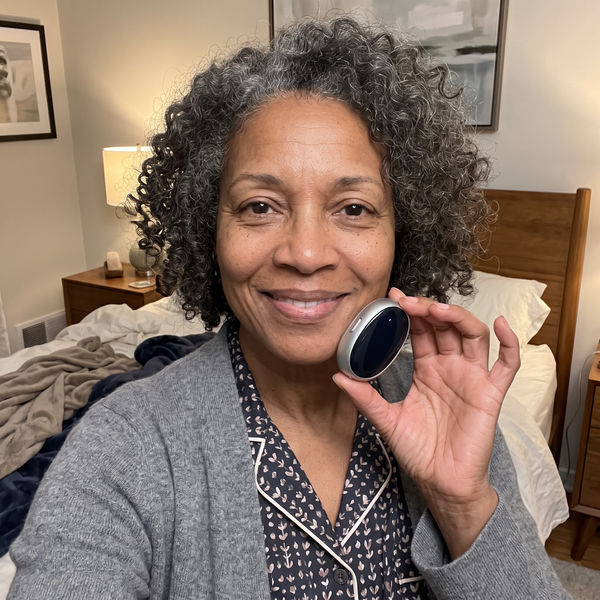
Worn under the chin. Gentle micro-pulses. Designed to help reduce snoring.
Snoring starts when the muscles in your throat and tongue relax in your sleep. The airway narrows and loose tissue vibrates as you breathe.
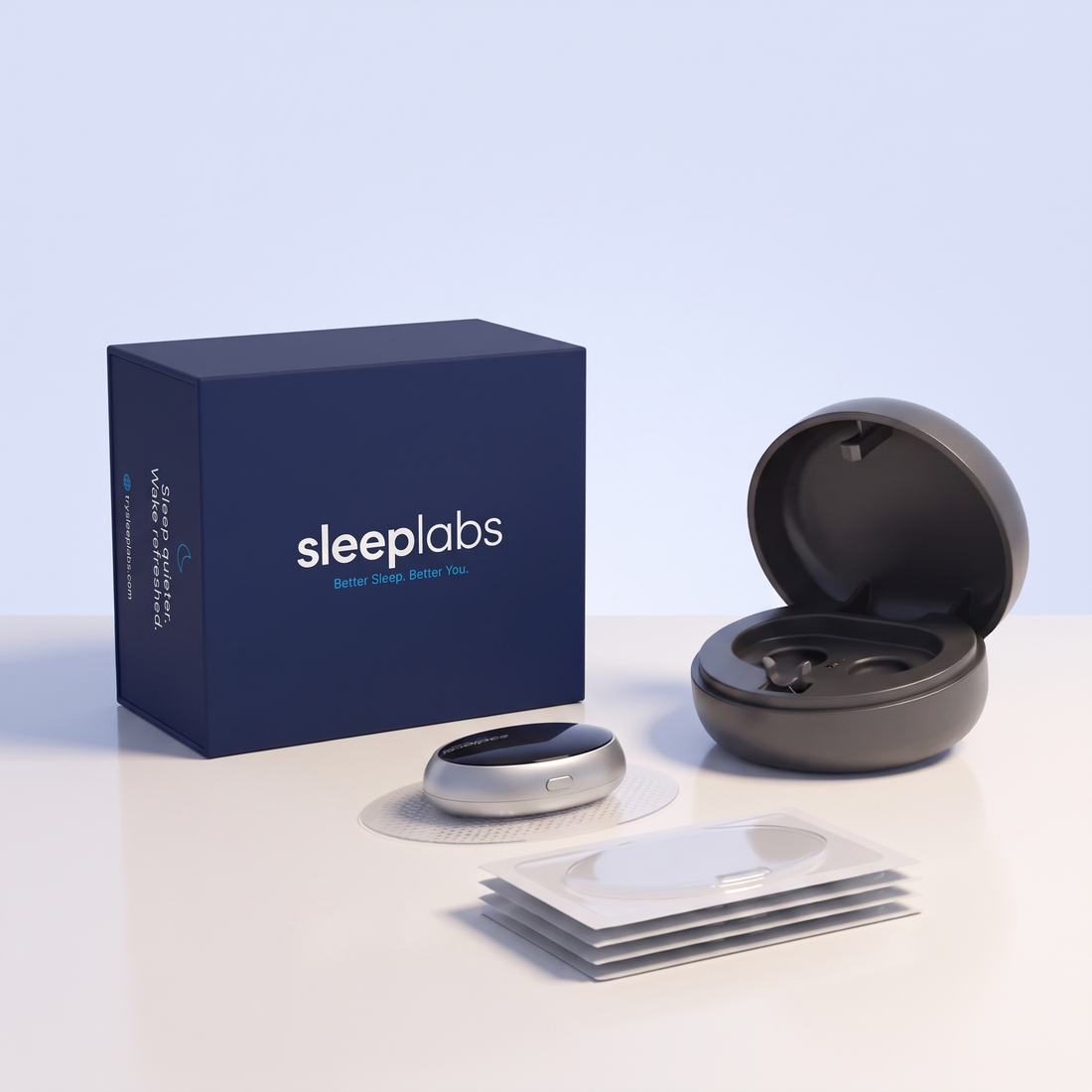
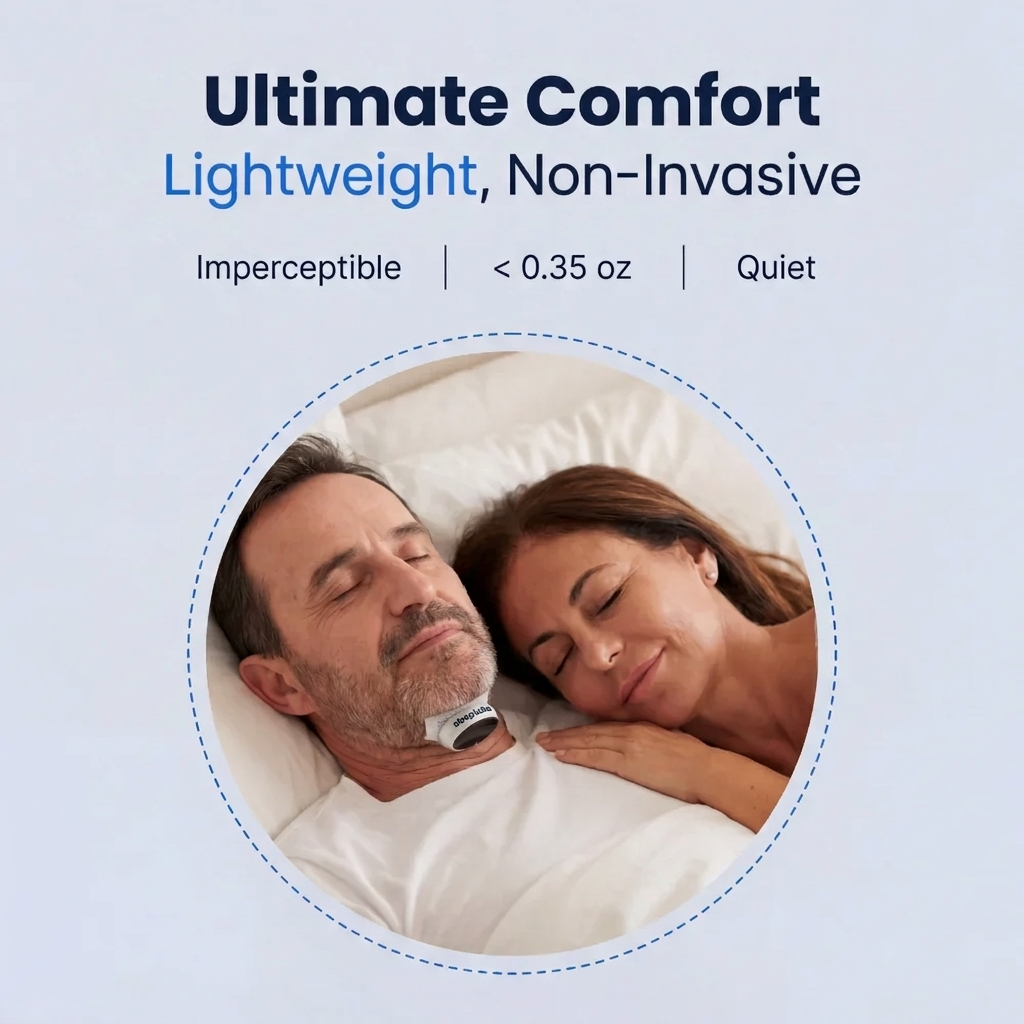
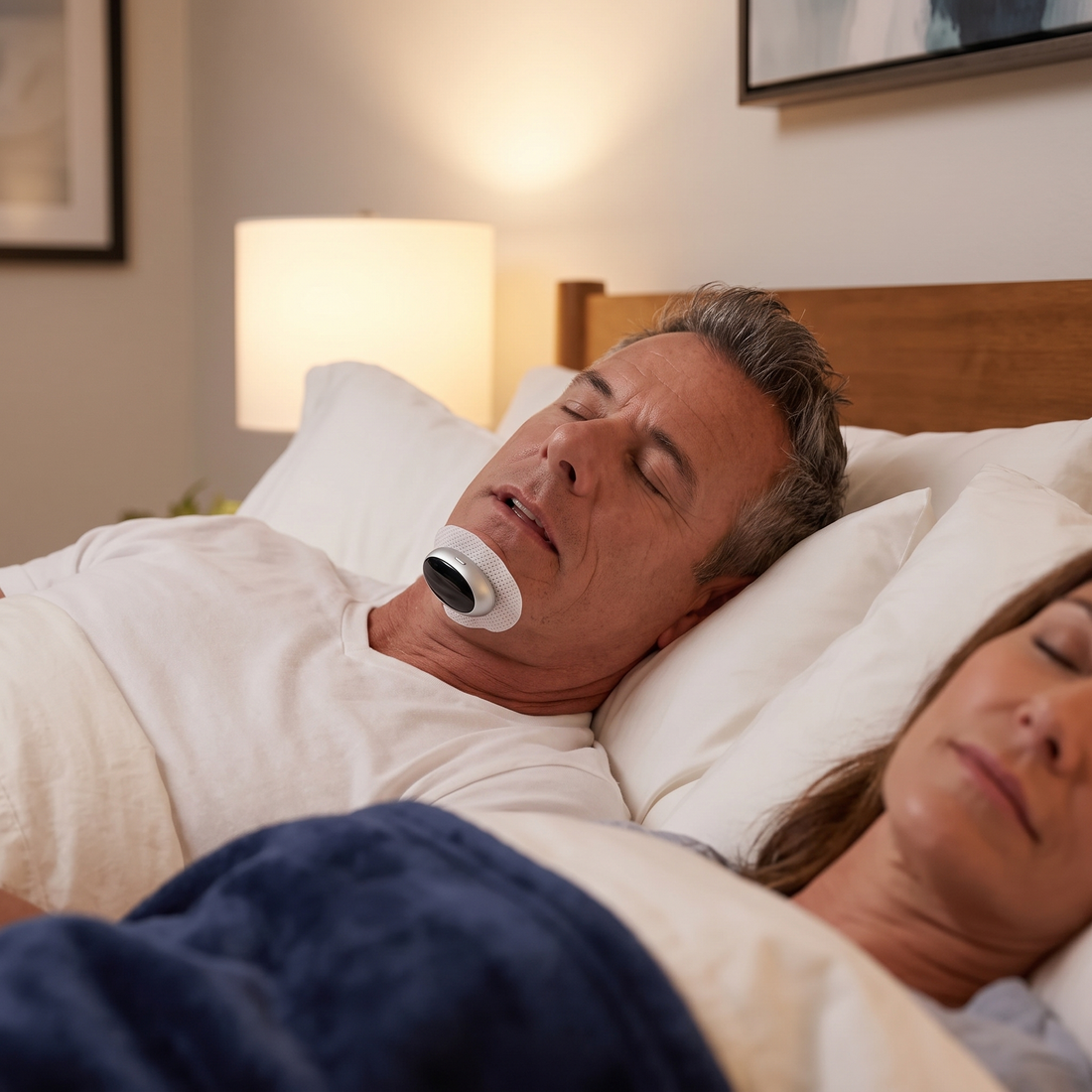
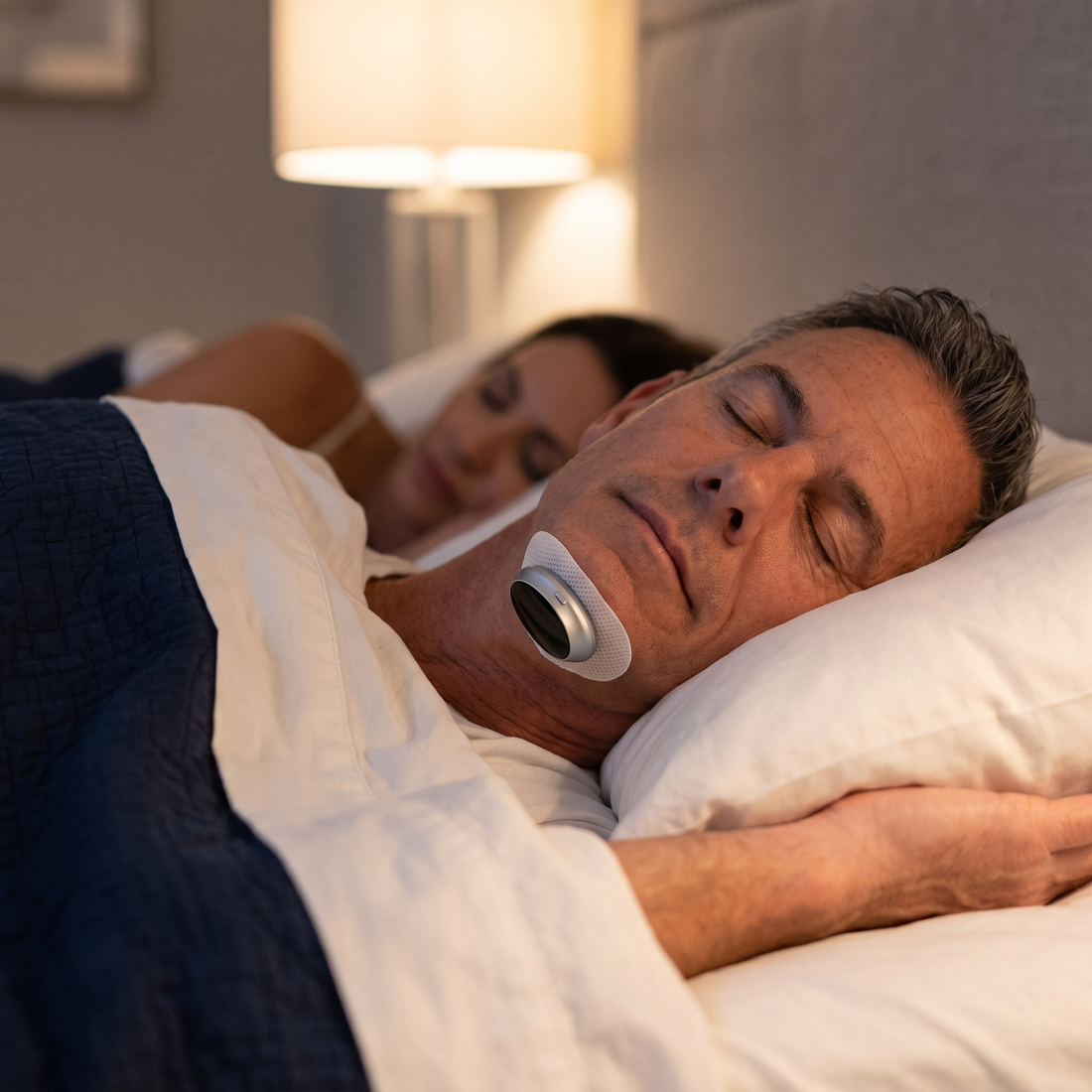
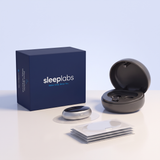
SleepLabs Pro sits under your chin on a contact patch and works through that patch with gentle micro-pulses to the muscles under your chin. You pick the setting.
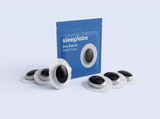
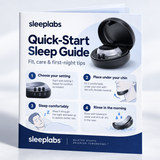
- Stick a single-use contact patch under the center of your chin.
- Click the device onto the patch and pick a comfortable setting.
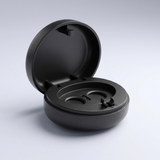
- Sleep. In the morning it goes back in its travel case, which is also its charger.

Reason 1: You’re the last to know
The snorer sleeps through it. Everyone else gets the full concert.
Snoring happens while you’re asleep, so the person making the noise rarely hears it. You wake up feeling fine. The person next to you wakes up counting the hours.
Most people only find out when someone tells them, or plays them a recording.
If your partner has a folder on their phone just for your snoring, keep reading.

Reason 2: It can split up the bedroom
It starts with one night on the couch.
In a 2023 survey by the American Academy of Sleep Medicine, more than a third of Americans said they sometimes or always sleep in another room because of a bed partner. Loud snoring was one of the reasons.
Nobody plans a “sleep divorce.” It happens one night at a time: the couch, then the guest room, then it’s just how things are.
An elbow in the ribs at 2 a.m. is not a love language.

Reason 3: It follows you everywhere
Hotels, hunting cabins, sleeper berths, the in-laws’ guest room.
At home, one person hears it. On the road, the whole group does: shared hotel rooms, fishing trips, bunkhouses, the sleeper berth, the pull-out couch at your sister’s place.
Every group trip has “the snorer.” Nobody wants to be the snorer.
If your buddies draw straws over who has to room with you, it’s not because you’re fun.

Reason 4: Long days make every night count
Job sites, long hauls, double shifts, early school runs.
The CDC recommends at least 7 hours of sleep a night for adults, and about 1 in 3 American adults regularly get less.
When the alarm goes off at 5 a.m., there isn’t much night to spare. SleepLabs Pro won’t make up for a short night. But if snoring is keeping the house up, that’s one problem you can do something about.
Quick math: a 5 a.m. alarm minus 7 hours means lights out by 10 p.m. How often does that happen at your place?

Reason 5: There can be two tired people at breakfast
You slept fine. Ask the person across the table.
The person next to a snorer often gets the worst of it: lying awake, waiting for a quiet stretch, giving up and grabbing a pillow. They won’t always say it.
The National Heart, Lung, and Blood Institute says not getting enough sleep can make it harder to focus, make decisions and keep your mood in check. Short fuses at breakfast don’t come out of nowhere.
Ever heard “you were really loud last night” before your first sip of coffee? Exactly.

Reason 6: Most fixes help the listener, not the snorer
Earplugs, a fan on high, the couch.
Earplugs, white noise, a pillow over the head, the guest room: they all help the listener cope. None of them do anything about the snoring.
Then come the strips, sprays, mouthpieces and masks. Plenty of people end up with a drawer full of them. SleepLabs Pro goes under your chin instead: nothing in your mouth, nothing over your face.
Got a “snoring drawer” at your house? You’re in good company.

Reason 7: Sometimes snoring is more than snoring
Know the signs that call for a doctor, not a gadget.
According to Mayo Clinic, snoring that comes with pauses in breathing, gasping or choking at night, or heavy daytime sleepiness can be a sign of obstructive sleep apnea, and that needs a doctor’s evaluation.
SleepLabs Pro isn’t a sleep apnea treatment, it doesn’t diagnose anything or track your AHI, and if you use CPAP, keep using it. SleepLabs is made for everyday snoring.
Your partner says you stop breathing at night? That’s a doctor’s visit, not a shopping trip.

ONE LAST THING
THEY STOPPED COMPLAINING. DID YOU STOP SNORING?
You sleep through it. They might not.
- No prescription needed. It’s a wellness device for everyday snoring.
- Sleeping separately? Your snoring could be the reason.
- Tired of waking them up? It's time to try something different.
- 90-night trial. Ready to make a change?
Reviews
What couples are saying
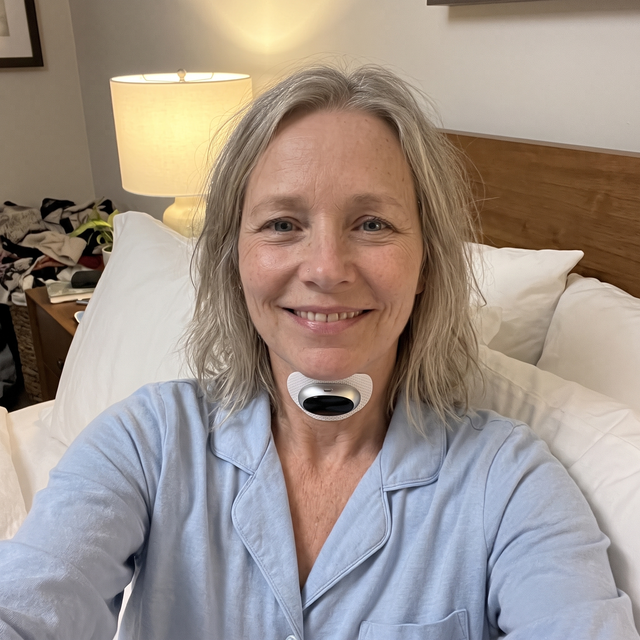
My husband can finally sleep next to me again
His snoring used to be unbearable. After the first week with SleepLabs Pro, it's like a switch flipped. We're both sleeping through the night.
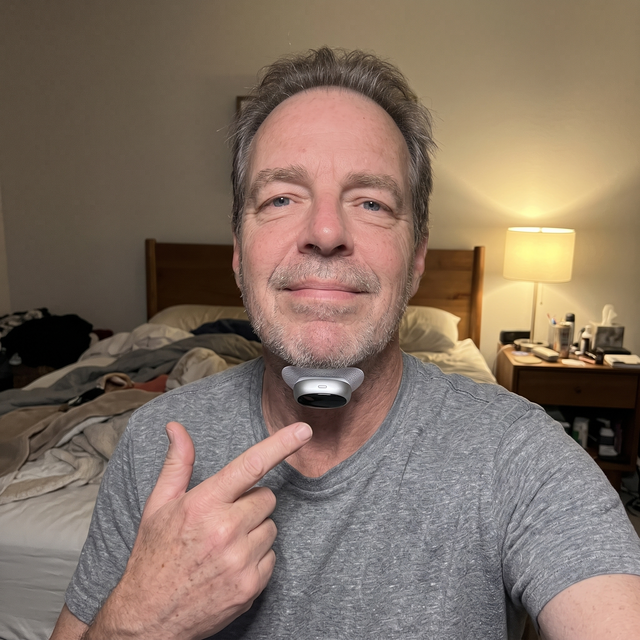
My wife noticed the difference before I did
I wasn't expecting much, but after about a week my wife said I barely snore anymore. I'm sleeping deeper and waking up with a lot more energy.
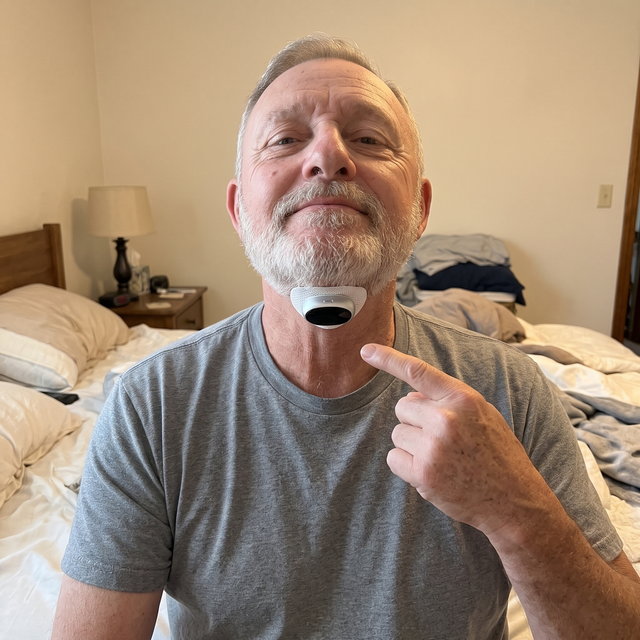
Wish I'd tried this years ago
Tried nasal strips, sprays, everything. This is the first thing that's actually worked, and it's comfortable enough that I forget I'm wearing it.
FAQ
Before you ask
What does it actually do?
SleepLabs Pro sits directly underneath the center of your chin (not on your throat), held on by an adhesive contact patch. While you sleep, it works through that patch with gentle micro-pulses to the muscles under your chin. It’s designed to help reduce snoring. You start on a low setting and adjust to what feels comfortable.
Do I have to keep buying patches? What do they cost?
Yes. Each contact patch is single-use, so you’ll use one a night. Starter patches come in the box. After that, refill packs are $65 for 20, $85 for 40, $110 for 60 or $160 for 100, which works out to as little as $1.60 a night. See refill packs. If a patch irritates your skin, stop using it.
Will the patch stay on all night?
Put it on clean, dry skin directly under the center of your chin, and skip lotion or oil there at bedtime. Use a fresh patch every night. A thick beard under the chin can make it harder for the patch to stick.
I have sleep apnea or use CPAP. Is this for me?
No. SleepLabs Pro is a wellness product designed to help reduce snoring. It isn’t intended to diagnose, treat or cure sleep apnea or any other medical condition, and it doesn’t measure your AHI. Never stop CPAP or another prescribed treatment because of a SleepLabs product. Drivers: it doesn’t replace any sleep apnea treatment your DOT medical examiner requires. If you stop breathing in your sleep, wake up gasping or feel exhausted during the day, talk to your doctor.
Can I use it with a pacemaker or another implant?
Ask your doctor first. SleepLabs Pro works with gentle micro-pulses, so if you have a pacemaker or another implanted electronic device, get your doctor’s OK before you order.
What if it isn’t right for me?
Use it for 90 nights in a row and, if you’re still not happy, you can request a full refund on the device. Returns before 90 nights are accepted minus a 30% restocking fee. You’ll need a return authorization first, you pay return shipping, original shipping isn’t refundable, and opened contact patches can’t be returned. Read the full refund policy.
Your partner will thank you for reading this far.
$89. Starter patches and a travel charging case in the box. 90-night satisfaction trial, terms in the FAQ.